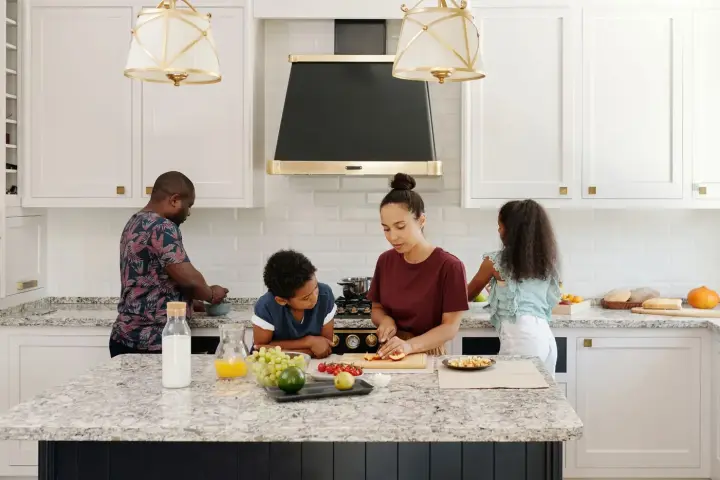
You do not need a spare room to set up somewhere calm for a baby. A corner of your bedroom or a small spare room can work well if you plan the zones, keep storage simple and put safety first.
Start with the safe sleep space
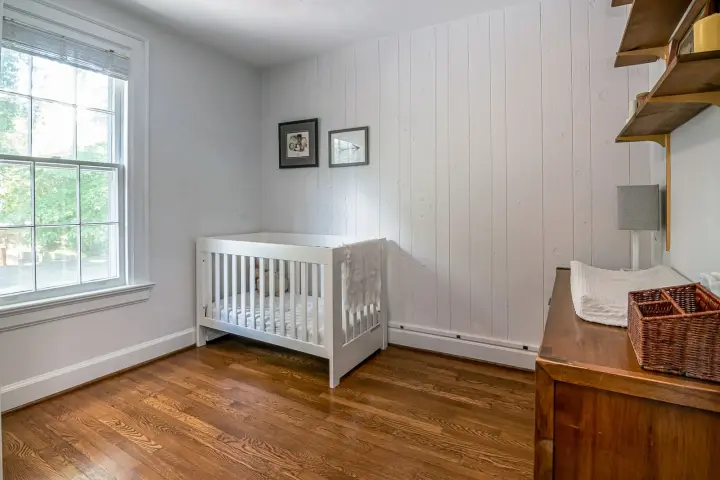
The CDC and the American Academy of Pediatrics recommend a firm, flat sleep surface (a crib, bassinet or play yard that meets current safety standards, with a fitted sheet) and an empty sleep space with no pillows, blankets, bumper pads or toys. They also recommend keeping the baby’s sleep surface in the parents’ room, ideally for at least the first six months. In a small home, that may mean your bedroom is the sleep zone and the “nursery” is mainly for changing and storage. Our safe sleep summary has the details.
Plan three zones
- Sleep: the bassinet or crib, with clear space around it.
- Changing: a dresser with a changing pad (or a dedicated table), with diapers, wipes and a change of clothes within arm’s reach so you never leave the baby unattended.
- Feeding and cuddling: a comfortable chair with a small table or shelf for water, burp cloths and a lamp.
Try laying it out with our Nursery Visualizer before you buy or move anything.
Store things up, not out
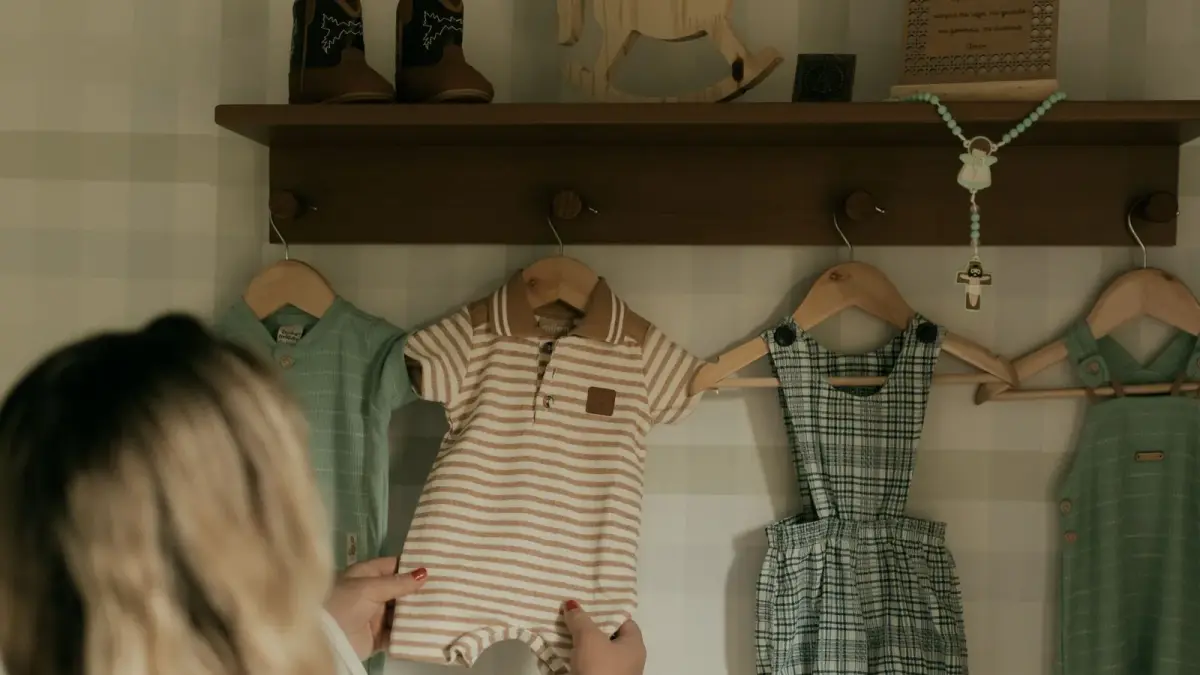
- Use wall space: shelves, hooks and a hanging organizer on the back of the door.
- Keep the things you use daily (diapers, wipes, creams) in open bins at hand height, and the rest in labeled boxes higher up.
- Rotate clothes by size so only the current size is easy to reach.
Anchor furniture and keep cords out of reach
The Consumer Product Safety Commission’s Anchor It! campaign warns about furniture and TVs tipping over onto children. Anchor tall shelves and dressers to the wall, put TVs on a sturdy base or anchor them, and keep cords out of reach. Anchors are inexpensive and take little time to install.
Keep it calm
- Choose soft, dimmable lighting for night feeds.
- Limit the number of items on display; a tidy space feels calmer.
- Resist buying a lot before the baby arrives. You will learn what you actually need once the baby is here.
A shopping checklist
Our shopping checklists describe what to look for in common nursery items such as storage bins and sound machines. They list types of products rather than brands, and any Amazon links are affiliate links.
Sources and further reading
This article is general information, not medical advice. It does not replace guidance from your doctor, midwife, pediatrician or other qualified professional. Read our health information disclaimer.