“Three more bites of chicken and you can have dessert.” Most of us have said it. It feels like a clever deal. But pediatric experts warn that using dessert as a reward can backfire. So how do you serve dinner and dessert in a way that keeps the peace, and keeps the sugar reasonable? This guide shows a calmer way.
⚡ The short answer
The American Academy of Pediatrics advises against using treats as bribes, because bribes can make the treat seem more valuable and the dinner food seem like a chore. A better approach is to serve a simple, mostly fruit-based dessert as a normal part of the meal plan, without making it a prize for eating.
Keep portions small, keep added sugar low, and let kids decide how much they eat.
This guide is for parents who want healthy dinners and healthy desserts without daily bargaining. You will learn why bribing backfires, how to serve dessert calmly, which desserts keep added sugar low, and two simple recipes kids can help make. We will end with mistakes, tips and a checklist. 🍓
This is general information, not medical advice. For children with allergies, medical conditions or feeding concerns, talk to your pediatrician.
Why “Eat Your Dinner and You Can Have Dessert” Backfires
It sounds fair. But think about what the deal tells your child: dinner is the unpleasant thing you have to get through, and dessert is the real prize. Over time, that can make vegetables and other dinner foods seem like a punishment and sweets seem like a reward.
The American Academy of Pediatrics lists “skip the bribes” among its tips for parents of picky eaters. It says that using treats as incentives makes the preferred foods seem more desirable and can create conflict at the dinner table. The AAP also advises parents not to fuss when a toddler refuses a meal. It is the parent’s job to provide the food, and the child’s decision whether to eat it.
So if bribing makes things worse, what is the alternative? Serve what you plan to serve, calmly, and let your child decide how much to eat of it. That includes dessert.
💡 Take the drama out
When dessert is just “what we have after dinner some days,” it stops being a weapon. When dinner is just “what we eat,” it stops being a chore.
What Makes a Dessert “Healthy”?
There is no official definition of a “healthy dessert,” but a few ideas help.
- Built around fruit. Whole fruit has fiber, water and natural sugar, which the CDC does not count as added sugar.
- Low in added sugar. The CDC says no amount of added sugars is recommended as part of a healthy diet, and young children should have none. The 2025–2030 federal guidance, according to Harvard’s analysis, limits added sugars to no more than 10 grams in a meal.
- Small in portion. A few bites after dinner is often enough.
- Simple in ingredients. Fewer ingredients make it easier to know what is in it.
- Served as part of a plan. Dessert on some nights, not every night, and not tied to eating.
Remember that honey should never be given to a baby under 12 months, and that guidance on added sugars is stricter for young children. Ask your pediatrician what is right for your child.
How to Serve Dessert Without Bribes
Here is a calm approach many families use, based on the AAP’s advice not to bribe and to avoid mealtime battles.
- Decide the plan ahead. Dessert is on the menu on certain nights, like Friday or Sunday, or after dinner as a small fruit dish. It is not offered as a reward.
- Serve dinner first, without negotiating. Put out small portions, and say nothing about how much to eat.
- Serve dessert at the table. A tiny portion, on a small plate, with the family.
- Keep the portion fixed. Serve the same small amount whether your child ate a lot or a little.
- Stay neutral about eating. Avoid saying “good job eating!” or “you did not eat, so no dessert.”
- Keep the routine steady. After a few weeks, power struggles usually fade.
Why this works: when dessert does not depend on dinner, kids lose their reason to bargain. Dinner becomes calmer, and children can listen to their hunger.
Dessert is not a prize for eating dinner. It is just part of a balanced, sometimes-sweet routine.
Healthy Dessert Ideas the Family Will Enjoy
Here are easy ideas, with a quick note on the added sugar. Always cut foods into safe sizes for young children.
| Dessert | What it is | Added sugar note |
|---|---|---|
| Fresh fruit plate | Sliced melon, berries and orange segments | None added |
| Yogurt parfait | Plain yogurt layered with berries and a sprinkle of oats | Low if you use plain yogurt |
| Baked cinnamon apples | Apples baked with cinnamon and a splash of water | None needed with sweet apples |
| Frozen banana “nice cream” | Frozen bananas blended until creamy | None added |
| Fruit and cheese plate | Soft fruit with small cheese cubes | None added |
| Applesauce with cinnamon | Unsweetened applesauce, warmed | None if the label says unsweetened |
| Frozen yogurt bark | Plain yogurt spread thin, topped with berries, then frozen and broken up | Low with plain yogurt |
| Chia pudding | Chia seeds soaked in milk, topped with fruit | Low if unsweetened |
What to take from the table: most of these have no added sugar at all. That means you can serve them more often without worrying about hitting the limit.
Recipe 1: Frozen Banana “Nice Cream”
This is a family favorite because it feels like a treat but is made of just one fruit. It is very simple.
📌 Recipe note
This is a simple, classic method. We have not test-made this exact version. Very ripe bananas give the best flavor. If your blender struggles, let the bananas sit for 5 minutes and add a splash of milk.
Frozen Banana “Nice Cream”
Ingredients
- 2 very ripe bananas, peeled and sliced into coins
- 1 to 2 tablespoons milk (dairy or non-dairy), only if needed
- A pinch of ground cinnamon (optional)
- 1/4 teaspoon vanilla extract (optional)
Method
- Spread the banana slices on a plate or tray lined with parchment, and freeze for at least 2 hours, until solid.
- Put the frozen slices in a blender or food processor. Add a splash of milk if needed.
- Blend, stopping to scrape the sides, until smooth and creamy. It will look crumbly first, then smooth.
- Stir in the cinnamon and vanilla if you like. Serve right away as a soft-serve, or freeze for 15 minutes for a firmer scoop.
Recipe 2: Baked Cinnamon Apples
Warm apples smell like dessert and need no sugar when you use sweet varieties.
📌 Recipe note
This is a classic, simple method. We have not test-baked this exact version. Baking times vary with apple size and variety, so check them with a fork.
Baked Cinnamon Apples
Ingredients
- 4 medium sweet apples, such as Gala or Fuji
- 1 teaspoon ground cinnamon
- 2 tablespoons water
- 1 tablespoon butter, cut into small pieces (optional)
- A small handful of rolled oats or chopped nuts for topping (optional; skip nuts for young children and allergies)
Method
- Heat the oven to 350°F (175°C).
- Core the apples, leaving the bottoms intact, or peel and slice them into a baking dish.
- Put the apples in a baking dish. Sprinkle with cinnamon, add the water and dot with butter if using.
- Bake for 25 to 30 minutes, until the apples are tender when pierced with a fork.
- Let them cool for a few minutes before serving, because baked fruit stays hot inside.
What About Birthdays, Holidays and Party Treats?
Everyday dessert and special-occasion dessert are two different things. A birthday cake is part of the party. You do not need to turn it into a nutrition lesson, and you do not need to guard against every sweet at every gathering.
Here is a balanced way to think about it:
- Enjoy the occasion. Cake at a birthday party is fun, and a single treat is part of normal life.
- Keep daily life steady. The regular routine of fruit-based desserts and balanced meals is what shapes habits.
- Do not label foods “good” or “bad.” Kids who hear that may feel guilt around sweets. Say “everyday foods” and “sometimes foods” instead.
- Offer a normal meal around the party. A balanced lunch before a party means your child is not arriving starving.
- Let your child decide how much. At parties, trust your child to stop when they are full, as long as the portions are reasonable.
Added-sugar guidance is stricter for very young children, so if your child is under two or you are unsure, ask your pediatrician about party foods.
Getting Kids to Help
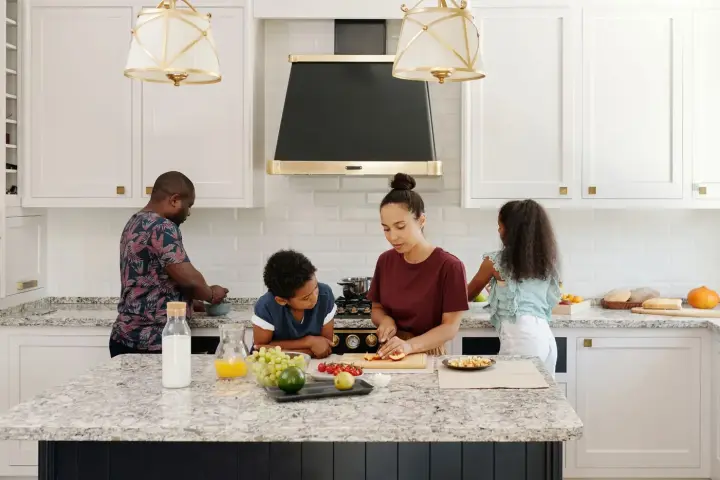
The AAP suggests involving kids in meal planning and letting toddlers help with supervised tasks like stirring and counting. These ideas work for dessert, too.
- Let kids choose the fruit. “Berries or peaches tonight?” gives a choice without chaos.
- Give small jobs. Peeling bananas, sprinkling cinnamon and pressing the blender button are all kid-friendly.
- Make it a ritual. A Sunday “dessert-making” time becomes a favorite memory.
- Let them name it. “Monkey ice cream” is more fun than “frozen banana.”
Dinner Ideas That Feel Like Fun
Healthy dinners are easier when they are interactive. Here are some meals kids tend to enjoy.
| Format | How it works | Why kids like it |
|---|---|---|
| Build-your-own tacos or bowls | Small bowls of protein, veggies, cheese and toppings | Control and choice |
| Sheet-pan dinners | Chicken, potatoes and veggies roasted together | Easy cleanup, familiar flavors |
| Pasta with a hidden-veggie sauce | Blended tomato and vegetable sauce | Familiar and mild |
| Mini pizzas on whole-wheat pitas | Kids add sauce, cheese and toppings | Hands-on |
| Soup and sandwich night | A small bowl of soup with a cut-out sandwich | Comforting and customizable |
Helpful Tools for Easy Family Desserts
These products are examples, and we did not test them. The details come from their Amazon listings (checked October 4, 2026), and listings can change.
Pick 1 · Blend frozen bananas and smoothies
nutribullet Personal Blender, 600W, with 24 oz and 18 oz cups
May suit: Families who want to make fruit smoothies, frozen-banana treats and sauces at home.
A compact blender for everyday use. Why it works: single-serve cups mean a smoothie or frozen-fruit treat in a minute. Best for: fruit smoothies, banana “nice cream” and quick sauces. Problem it solves: a big appliance that nobody wants to wash.
- Personal blender with a 24 oz cup and an 18 oz cup, per the title
- Listing describes a push, twist and blend design
- Listing says it blends fruits, vegetables and liquids
- Compact: about 5.5 x 5.5 x 7.9 inches, per the listing
- Cups
- 24 oz and 18 oz (per title)
- Power
- 600W in the title; the listing also mentions 700 peak watts
- Design
- Push, twist and blend (per listing)
- Size
- About 5.5' D x 5.5' W x 7.9' H (per listing)
- Brand
- NutriBullet
Strengths
- Small footprint for a counter
- Single-serve cups are handy for kids' smoothies
- Easy to use
Limitations
- Single-serve cups mean small batches
- Smoothies still contain the natural sugars in fruit, so keep portions sensible
Affiliate link. As an Amazon Associate, we earn from qualifying purchases.
Pick 2 · An easy unsweetened dessert or topping
Mott's Unsweetened Applesauce (2 jars, 46 oz each)
May suit: Families who want a no-sugar-added fruit snack or a swap for some of the sugar and oil in muffins and quick breads.
An easy pantry helper. Why it works: apples bring natural sweetness and moisture, so you can often use less sugar. Best for: muffins, quick breads, oatmeal and snack time. Problem it solves: the sugary fruit cups and pouches that list sugar on the label.
- Listing says two ingredients: apples and ascorbic acid (vitamin C)
- No sugar added, unsweetened
- Listing says it is made from real fruit and is non-GMO
- Two large 46-ounce jars
- Size
- 2 jars, 46 oz each
- Ingredients
- Apples and ascorbic acid (per listing)
- Sweetener
- None added (unsweetened)
- Form
- Sauce
- Brand
- Mott's
Strengths
- Short ingredient list
- Easy swap for part of the sugar or oil in many quick breads
- Good as a snack on its own
Limitations
- Jars are large, so plan to use them within the time on the label after opening
- Fruit still has natural sugars, though they are not counted as added sugars
Buy from Amazon : Mott's Unsweetened Applesauce (2 jars, 46 oz each) (opens Amazon in a new tab)
Affiliate link. As an Amazon Associate, we earn from qualifying purchases.
Pick 3 · Layer parfaits in single-serve jars
Ball Wide Mouth 16 oz Glass Mason Jars with Lids and Bands (12 pack)
May suit: Families who like make-ahead breakfasts, overnight oats, yogurt parfaits and glass storage.
A simple way to make grab-and-go breakfasts. Why it works: a wide mouth and a tight lid make make-ahead jars easy. Best for: overnight oats, chia pudding and yogurt cups. Problem it solves: busy mornings with nothing ready.
- Wide-mouth glass jars, 16 ounces each
- Listing says food-grade glass and BPA free
- Lids and bands included
- Listing describes airtight, leakproof lids
- Count
- 12 jars with lids and bands
- Size
- 16 fl oz each
- Material
- Glass (per listing)
- Material features
- BPA free, food grade, heat resistant (per listing)
- Brand
- Ball
Strengths
- Wide mouth makes filling and cleaning easier
- Glass does not hold onto smells or stains
- Good size for a single serving of oats or yogurt
Limitations
- Glass is heavier and can break if dropped
- Check the brand's instructions before microwaving or freezing
Affiliate link. As an Amazon Associate, we earn from qualifying purchases.
7 Common Mistakes (and Easy Fixes)
❌ Mistake 1: Using dessert as a bribe
✅ Fix: Serve dessert on a plan, not as a prize.
❌ Mistake 2: Making dessert huge
✅ Fix: Keep portions small and the same every time.
❌ Mistake 3: Making it every night
✅ Fix: Plan dessert for certain nights, and use fruit on other nights.
❌ Mistake 4: Praising or scolding based on eating
✅ Fix: Stay neutral about how much your child eats.
❌ Mistake 5: Choosing sugary “kid” desserts
✅ Fix: Pick fruit-based ideas with little or no added sugar.
❌ Mistake 6: Forgetting safety
✅ Fix: Cut foods to a safe size for your child’s age.
❌ Mistake 7: Giving honey to a baby
✅ Fix: Never give honey to children under 12 months.
Why these fixes work: they all remove the power struggle and keep sugar low. That leaves room for kids to enjoy food on their own terms.
Pro Tips for Calmer Dinners and Happier Desserts
- Serve small portions. A tablespoon of each food is enough. Best for: toddlers and preschoolers.
- Pair new foods with favorites. The AAP suggests pairing, such as broccoli with cheese. Best for: picky eaters.
- Prep fruit in advance. A container of cut fruit makes dessert quick. Best for: busy weeknights.
- Keep the language neutral. Say “dessert is fruit tonight” without any “if.” Best for: avoiding bargaining.
- Eat together. Best for: modeling healthy habits.
Make dinner pleasant and dessert predictable, and most of the battles disappear.
Real-Life Examples: Three Dinner and Dessert Stories
These are illustrative examples based on common situations. They are not real customer reviews or quotes.
Example 1: The bargaining stops
A mom stops saying “eat three more bites.” Instead, dessert is a few strawberries on Fridays. What changed: bedtime battles ended, and her son started to eat a few more bites on his own.
Example 2: The banana ice cream night
A dad makes frozen banana “nice cream” with his kids every Sunday. What worked: a predictable, fun ritual that does not depend on dinner.
Example 3: The apple surprise
A grandmother bakes cinnamon apples for the family. The kids gobble them up. What worked: a warm, simple dessert with no added sugar.
💡 The pattern
Each family stopped using dessert as a lever and started using it as a routine. That is what lowers the stress.
Frequently Asked Questions
Should I let my child have dessert if they did not eat dinner?
Pediatric groups advise against using dessert as a bribe or reward. Many families plan dessert separately, in a small portion, so it does not depend on how much was eaten.
Why shouldn’t I use dessert as a reward?
The AAP says bribes make the preferred foods seem more desirable and create conflict at the table.
What are healthy dessert options for kids?
Fruit-based options with little or no added sugar, like fruit plates, yogurt parfaits, baked apples or frozen banana “nice cream.”
How much sugar is okay for kids?
The CDC says young children should have no added sugars, and the 2025–2030 federal guidance is strict about added sugars. Ask your pediatrician what is right for your child.
Is it okay to skip dessert altogether?
Yes. Many families serve dessert only on some nights, and some skip it. Plan what works for your household.
Can babies have desserts?
Added sugars are not recommended for young children, and honey is unsafe under 12 months. Ask your pediatrician about foods for babies.
Your Dinner and Dessert Checklist (and Final Thoughts)
- Do not use dessert as a reward or a bribe.
- Plan dessert for certain nights.
- Serve a small, fixed portion.
- Choose fruit-based desserts with little or no added sugar.
- Keep the conversation neutral about eating.
- Let kids help choose and make dessert.
- Cut food to a safe size.
- Ask your pediatrician about added sugar for your child.
🛒 Want a few tools to make healthy desserts easy? See the picks below.
Final thoughts
Healthy dinners and healthy desserts do not need bargaining. Serve small portions, plan dessert calmly, build it around fruit, and let children decide how much to eat.
Over time, the table gets calmer, kids get more comfortable with food and everyone enjoys the meal more. 💚
Affiliate note: some links in this article are Amazon affiliate links. If you buy through them, we may earn a small commission at no extra cost to you. See our Affiliate Disclosure. Product details were checked on Amazon.com on October 4, 2026 and may change.
Sources and further reading
- HealthyChildren.org (American Academy of Pediatrics) — 10 Tips for Parents of Picky Eaters
- CDC — Picky Eaters and What to Do
- CDC — Get the Facts: Added Sugars
- CDC — Foods and Drinks to Avoid or Limit
- Harvard T.H. Chan School of Public Health, The Nutrition Source — Dietary Guidelines for Americans 2025–2030
This article is general information, not medical advice. It does not replace guidance from your doctor, midwife, pediatrician or other qualified professional. Read our health information disclaimer.