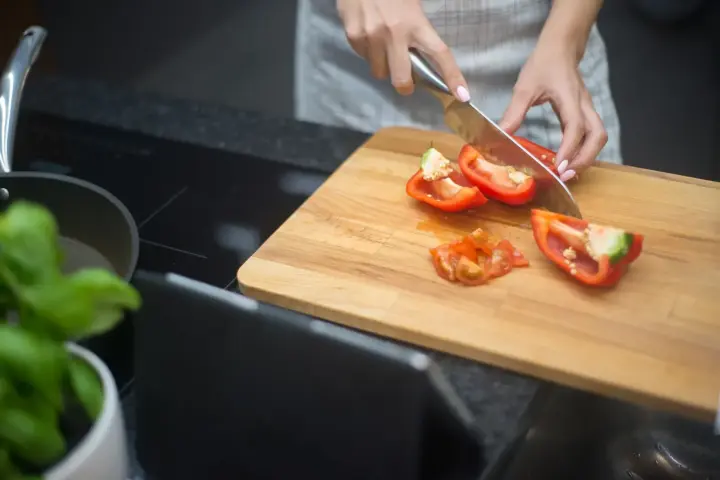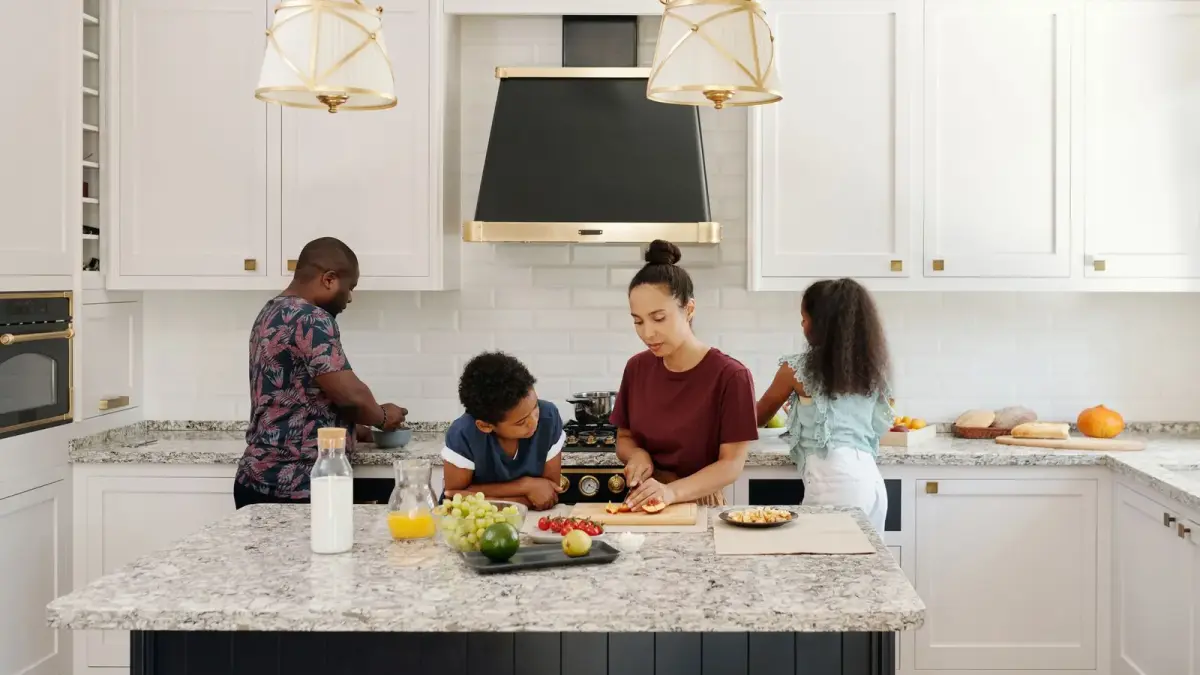
The bakery aisle is easy. Muffins, cookies and loaves, all wrapped and ready. So why would anyone turn on the oven, dirty a bowl and wait for batter to bake? Because baking from scratch gives you something a package cannot: you decide what goes in.
⚡ The short answer
Baking from scratch lets you choose the ingredients. You can use whole grains, cut back on added sugar, avoid ingredients you do not want and keep allergens under control. It also fills the house with a good smell and gives kids a hands-on project. It is not always faster, and store-bought is fine sometimes.
This guide gives nine reasons to bake, an honest look at the downsides, the tools to start with, safe flour habits and a simple first-week plan.
This is general information, not medical advice. If someone in your home has a food allergy or special dietary needs, talk with your doctor or a registered dietitian. Baking at home does not make a recipe safe for every person. You still have to read every label. 🧁
Do not worry if you have never baked. You only need a few basic tools, a good recipe and patience for the first try. Let’s start with why it can be worth it.
What Does “Baking From Scratch” Mean?
Baking from scratch means you mix the basic ingredients yourself, such as flour, eggs, milk, butter or oil, a leavener and a sweetener, rather than using a boxed mix or buying finished products. There is no strict rule. Many home bakers mix from-scratch and shortcuts depending on the day.
You are still baking from scratch if you:
- Measure your own flour, sugar and leavener.
- Use fresh or frozen fruit and vegetables.
- Add your own flavors such as cinnamon, vanilla or lemon zest.
Some bakers also grind their own flour or make their own yogurt. That is optional. This article is about the everyday kind of scratch baking that anyone can do on a Saturday.
9 Good Reasons to Bake From Scratch
1. You control the sugar
The CDC says no amount of added sugars is recommended as part of a healthy diet. Many store-bought muffins, granola bars and cookies contain a lot of it. When you bake at home, you choose the amount. King Arthur Baking’s guide to sugars explains how sugar affects texture, moisture and browning, so you know what you are changing when you reduce it.
2. You can use whole grains
Harvard’s Nutrition Source explains that whole grains keep the bran and germ that refined grains remove. At home, you can swap part of the white flour for whole-wheat flour, add oats or use other whole grains. Many bakers start with half and half.
3. You know every ingredient
You can read the labels at the store and pick the products you want. If a family member has an allergy, you can choose ingredients and keep your kitchen as safe as you can. The FDA’s food allergy page lists the major food allergens. Always check labels, even on familiar products.
4. You choose the portion size
A bakery muffin can be very large. A homemade muffin can be as small or as big as you like. Smaller portions make it easier to enjoy a treat.
5. It can be a calm, creative hobby
Measuring, stirring and waiting can be relaxing. Many people find baking a gentle break from screens and busy days.
6. Kids can help
Children can pour, stir, mash bananas and press dough. Cooking skills build confidence, and kids who help make food are often more curious about eating it.
7. You can bake to fit your schedule
Bake once and freeze. Muffins, pancakes, loaves and cookie dough balls freeze well. A weekend hour can cover several weekday breakfasts.
8. You can reduce packaging
Buying flour, oats and sugar in bulk or larger bags can mean fewer individual wrappers than boxes of single-serve treats.
9. It tastes good
Fresh-baked food smells wonderful. A warm muffin on a rainy morning is hard to beat.
💡 You do not have to bake everything
Start with one recipe your family loves, such as banana muffins or pancakes. Making just one item from scratch is a win.
An Honest Look at the Downsides
Baking from scratch is not perfect for every family. It helps to be realistic.
- It takes time. Even a simple muffin recipe takes about half an hour to an hour from start to finish, including cleanup.
- It has a learning curve. Your first loaf might be dense. That is normal.
- It can cost more up front. You may need to buy flour, a leavener and a pan. Over time, many people find the costs balance out, but prices vary.
- It is not automatically healthy. Homemade cookies still have sugar and butter. A treat is still a treat.
- It makes dishes. You will have bowls and pans to wash.
- It needs food safety habits. Raw flour and raw eggs need care, as we explain below.
📌 It is okay to use shortcuts
A boxed mix, a store-bought crust or a frozen dough is not a failure. Do what works for your family this week.
Raw Flour and Dough: A Safety Note
This is the most important safety point in the whole article. According to the FDA and the CDC, flour is a raw agricultural product. Grains can pick up harmful bacteria such as Salmonella and E. coli in the field, and milling does not kill them. Cooking is what makes flour-based foods safe.
⚠️ Do not taste raw dough or batter
The FDA says not to eat, taste or let children play with raw dough or batter, including cookie dough and cake batter, before it is cooked. Do not try to heat-treat flour at home, because home methods may not kill all bacteria. Wash hands, bowls and surfaces with warm, soapy water after handling raw flour or eggs, and keep raw ingredients away from ready-to-eat foods.
A few easy habits help:
- Bake before you taste. Wait for the cooled finished product.
- Wash up. Wash hands, bowls, spoons and counters after you handle flour and eggs.
- Keep kids’ hands out of raw batter. Give them a clean job instead, such as cracking an egg into a separate bowl with your help, or stirring with a spoon and then washing hands.
- Chill dough as directed. Follow the recipe or package.
- Store leftovers safely. The USDA says most leftovers are safe in the refrigerator for three to four days.
Scratch, Mix or Store-Bought? A Fair Comparison
There is no wrong answer. Each option fits a different kind of day.
| What to compare | From scratch | Boxed mix | Store-bought |
|---|---|---|---|
| Ingredient control | Highest | Medium | Lowest |
| Time needed | Longest | Medium | None |
| Skill needed | Some | Little | None |
| Added sugar | You choose | Often set by the mix | Check the label |
| Allergen control | Best, if you read labels | Check the box | Check the label and the “may contain” line |
| Best for | Weekends, special diets, hobby bakers | Busy days | Emergencies and treats |
What to take from the table: scratch baking gives the most control but takes the most time. A smart plan mixes all three: scratch when you can, mix when you must and store-bought without guilt.
The Basic Tools to Start With
You do not need a fancy kitchen. A short list covers most recipes.
| Tool | Why you need it | Notes |
|---|---|---|
| Measuring cups and spoons | Accurate measuring | Use dry cups for flour and liquid cups for milk |
| Kitchen scale | More accurate than cups | Weighing flour avoids packing it in the cup |
| Mixing bowls | Mixing batter | Two or three sizes are handy |
| Muffin pan | Muffins and cupcakes | Standard 12-cup is most useful |
| Loaf pan | Quick breads | One standard size is enough to start |
| Sheet pan | Cookies, roasted veggies | Doubles as a dinner pan |
| Cooling rack | Cooling baked goods | Prevents soggy bottoms |
| Oven thermometer | Checks your oven’s true temperature | Many ovens run off by several degrees |
What to take from the table: a scale and an oven thermometer cost little and solve two of the most common baking problems: measuring and oven temperature.
Baking is mostly measuring and patience. Anyone can learn both.
Tools and Pans Worth Considering
These are examples that suit new bakers. We have not tested them for this article. The details come from their Amazon listings (checked October 4, 2026), and listings can change.
Pick 1 · A kitchen scale for accurate flour and sugar
OXO Good Grips 11 lb Stainless Steel Food Scale with Pull-Out Display
May suit: Anyone who wants more accurate flour and sugar amounts. Different flours and blends weigh different amounts per cup.
A scale takes the biggest source of error out of baking: scooping. Why it works: weight stays the same even when flour is packed tighter or looser. Best for: anyone who wants the same result every time. Problem it solves: dry, dense bakes caused by too much flour.
- Zero (tare) button lets you add ingredient after ingredient in the same bowl
- Pull-out display stays readable under a large mixing bowl
- Removable platform makes cleaning easier
- Stainless steel finish resists smudges and fingerprints
- Capacity
- 11 pounds
- Readout accuracy
- ± 0.1 oz or ± 1 g (per listing)
- Measures in
- lb, kg, oz and g (per listing)
- Display
- Digital, backlit, pull-out
- Weighing type
- Counter scale
Strengths
- Tare makes multi-ingredient recipes simple
- Pull-out display is not blocked by big bowls
- Works in grams and ounces
Limitations
- Reads in 1 g steps, so use measuring spoons for tiny amounts like baking soda
Affiliate link. As an Amazon Associate, we earn from qualifying purchases.
Pick 2 · An oven thermometer to check your oven's real temperature
Rubbermaid Commercial Products Stainless Steel Oven Monitoring Thermometer
May suit: Bakers whose muffins, cakes or cookies bake unevenly and who suspect the oven runs hot or cold.
A tiny tool that solves big problems. Why it works: many home ovens run hotter or cooler than their dial says, and a thermometer shows the real number. Best for: muffins, cakes and cookies. Problem it solves: flat, pale or burnt bakes with no clear cause.
- Listing says it shows the true oven temperature
- Reads from 60 to 580 degrees Fahrenheit, per the listing
- Stainless steel
- Designed for professional kitchens, per the listing
- Range
- 60 to 580 °F (20 to 300 °C), per listing
- Material
- Stainless steel (per listing)
- Use
- Check that your oven matches its dial
- Brand
- Rubbermaid Commercial Products
Strengths
- Cheap way to check oven accuracy
- Hangs or stands in the oven
- Helps explain baking mysteries
Limitations
- Only measures where it sits, so move it around to check hot spots
- Needs a few minutes to settle after preheating
Affiliate link. As an Amazon Associate, we earn from qualifying purchases.
Pick 3 · A 12-well muffin pan for muffins and cupcakes
USA Pan Bakeware Muffin Pan, 12-Well, Aluminized Steel
May suit: Home bakers who make muffins, cupcakes and egg cups every week and want a sturdy, easy-release pan.
A dependable muffin pan for weekly baking. Why it works: a nonstick coating and sturdy metal help muffins release cleanly and bake evenly. Best for: muffins, cupcakes and egg bites. Problem it solves: muffins that stick or bake unevenly.
- 12 wells in one pan
- Listing says a nonstick Americoat silicone coating that is PTFE, PFOA and BPA free
- Made in the USA, per the listing
- Each cup measures 2.75 x 2.13 x 1.38 inches, per the listing
- Wells
- 12
- Material
- Aluminized steel (per listing)
- Coating
- Americoat nonstick, PTFE, PFOA and BPA free (per listing)
- Cup size
- 2.75 x 2.13 x 1.38 inches (per listing)
- Made in
- USA (per listing)
- Care
- Hand wash recommended (per listing)
Strengths
- Even-sized cups for evenly baked muffins
- Quick release and easy cleanup, per the listing
- Sturdy steel construction
Limitations
- Hand washing is recommended, so it is not a dishwasher pan
- Standard-size cups, so mini muffins need a different pan
Buy from Amazon : USA Pan Bakeware Muffin Pan, 12-Well, Aluminized Steel (opens Amazon in a new tab)
Affiliate link. As an Amazon Associate, we earn from qualifying purchases.
Pick 4 · Glass mixing bowls in three sizes
Pyrex Essentials 3-Piece Glass Mixing Bowls Set
May suit: Bakers who want nesting bowls that go from mixing to the microwave or fridge.
Handy, simple bowls. Why it works: three sizes handle dry ingredients, wet ingredients and batter, and the glass goes straight to the microwave. Best for: muffin and cake batters. Problem it solves: cluttered counters and plastic bowls that stain.
- Set of three round glass bowls: 1 qt, 1.5 qt and 2.5 qt
- Tempered glass that the listing says resists stains and odors
- Freezer, microwave and dishwasher safe, per the listing
- Nesting design saves space
- Set
- 3 bowls: 1 qt, 1.5 qt, 2.5 qt
- Material
- Glass (listing says borosilicate in the details)
- Care
- Freezer, microwave and dishwasher safe (per listing)
- Brand
- Pyrex
Strengths
- Glass does not hold stains or odors
- Three sizes cover most mixing jobs
- Microwave safe for melting butter or chocolate
Limitations
- Glass can break if dropped
- The smallest bowl is tight for large batters
Buy from Amazon : Pyrex Essentials 3-Piece Glass Mixing Bowls Set (opens Amazon in a new tab)
Affiliate link. As an Amazon Associate, we earn from qualifying purchases.
How to Start: A Simple First Week
Do not try to bake five things in one week. Here is a gentle way to start.
- Pick one recipe. Choose a simple quick bread or muffin that your family likes.
- Read it twice. Read the whole recipe before you start, and check that you have each ingredient.
- Measure carefully. Use a scale if you have one. Level dry cups with a knife.
- Check the oven. Preheat fully, and use an oven thermometer if you have one.
- Set a timer early. Start checking a few minutes before the recipe says to.
- Cool and taste. Let it cool before you cut it, then decide what you would change.
Why this works: most beginner problems come from skipping a step: measuring loosely, a cold oven or taking food out too early or too late. A simple routine prevents most of them.
Easy Ideas for Your First Scratch Bakes
- Banana muffins or banana bread. Ripe bananas bring natural sweetness, so you can cut some added sugar.
- Pancakes. Mix on a weekend and freeze extras.
- Oatmeal cookies or oat bars. Oats add whole grain.
- Baked oatmeal. Easy, filling and forgiving.
- Pizza dough. Kids love to shape it, and it can be made with some whole-wheat flour.
- Biscuits or scones. A little practice makes them feel like a bakery treat.
How to Read a Recipe Like a Baker
A recipe is a set of instructions. A little habit can make it much easier to follow.
- Read the whole recipe first. Check the ingredients, the pans and the times before you start.
- Set out everything. Bakers call this “mise en place,” which means “everything in its place.” Measure ingredients into small bowls before you mix.
- Notice the verbs. “Fold” means gently mix. “Cream” means beat butter and sugar until fluffy. “Whisk” means beat with quick motions.
- Notice the clues. Recipes often give both a time and a clue, such as “golden on top” or “a toothpick comes out clean.” The clue matters more than the time.
- Notice the temperatures. Room-temperature ingredients mix more smoothly than cold ones. Preheated ovens bake more evenly.
Over time you will start to see patterns. Most muffin recipes, for example, share the same basic method: whisk the dry ingredients, whisk the wet ones, then combine just until mixed.
Swaps You Can Try Once You Are Comfortable
Once you have baked a recipe a few times, you might try small changes. Keep each change small and test one at a time.
- Replace half the white flour with whole-wheat flour. This adds fiber.
- Reduce the sugar a little. Try about one fourth less and see how it bakes. Sugar affects browning and moisture, so results vary.
- Add fruit or vegetables. Grated carrot, zucchini, mashed banana or pumpkin puree can add moisture.
- Use unsweetened applesauce for part of the fat. Many home bakers do this, but the texture can change.
- Add oats, seeds or nuts. Skip nuts if there are allergies or the kids are young.
8 Common Beginner Baking Mistakes (and Easy Fixes)
❌ Mistake 1: Packing flour into the measuring cup
✅ Fix: Spoon flour into the cup and level it, or weigh it.
❌ Mistake 2: Not preheating the oven
✅ Fix: Wait until the oven is fully hot.
❌ Mistake 3: Overmixing muffin or quick bread batter
✅ Fix: Stir until just combined. A few lumps are fine.
❌ Mistake 4: Opening the oven door too often
✅ Fix: Wait until the end of the minimum bake time before you check.
❌ Mistake 5: Skipping the oven thermometer
✅ Fix: Many ovens are off. A thermometer shows the truth.
❌ Mistake 6: Changing too many things at once
✅ Fix: Change one thing per batch.
❌ Mistake 7: Tasting raw batter
✅ Fix: Wait for the baked result. Raw flour and eggs can make you sick.
❌ Mistake 8: Cutting while hot
✅ Fix: Let loaves and cakes cool first so they hold their shape.
Why these fixes work: baking is chemistry. Accurate measuring, a correct oven and gentle mixing give the batter what it needs to rise and set.
Pro Tips for Beginner Bakers
- Weigh your flour. It is the most useful change you can make. Best for: consistent results.
- Use room-temperature eggs and milk when the recipe says so. Best for: smoother batters.
- Line pans with parchment. Best for: easy cleanup and clean release.
- Keep notes. Write changes on the recipe. Best for: improving next time.
- Freeze extras. Best for: busy weekdays.
Real-Life Examples: Three First-Time Baker Stories
These are illustrative examples based on common situations. They are not real customer reviews or quotes.
Example 1: The dense loaf
A new baker scoops flour straight from the bag and ends up with a heavy loaf. The fix: she spoons and levels the flour next time, then buys a scale.
Example 2: The oven that ran hot
A dad’s cookies burn at the bottom every time. An oven thermometer shows the oven runs hotter than the dial. What worked: adjusting the temperature.
Example 3: The helper in the kitchen
A mom lets her child mash bananas for muffins. The child eats a muffin happily. What worked: giving the kid a safe, real job.
💡 The pattern
Measure well, check your oven and change one thing at a time. That fixes most beginner problems.
Frequently Asked Questions
Is baking from scratch healthier?
It can be, because you control the sugar, fat and grains, but it is not automatically healthy. A homemade cookie is still a cookie.
Is baking from scratch cheaper?
It depends on what you bake and where you shop. Prices change, so compare unit prices for the items you use often.
Can I taste the batter?
The FDA and CDC say not to eat raw dough or batter, because raw flour and eggs can carry bacteria. Wait until it is baked.
Do I need a stand mixer?
No. Most quick breads and muffins are mixed by hand with a spoon.
How long do homemade baked goods last?
Most leftovers keep for three to four days in the refrigerator, according to the USDA. Freezing is better for longer storage.
What if my child has a food allergy?
Read every label, avoid cross-contact and talk with your child’s doctor or allergist. The FDA lists the major allergens on its food allergy page.
Your Baking-From-Scratch Checklist (and Final Thoughts)
- Pick one simple recipe and read it twice.
- Gather basic tools: measuring cups, bowls, a pan and a thermometer.
- Measure flour by spooning and leveling, or weigh it.
- Preheat the oven fully.
- Do not taste raw dough or batter.
- Wash hands, bowls and counters after handling flour and eggs.
- Cool before slicing.
- Refrigerate or freeze leftovers promptly.
🛒 Want help planning a week of simple home cooking?
Final thoughts
You do not have to bake everything from scratch to enjoy the benefits. One muffin recipe, one pancake mix, one weekend loaf. Each one is a small step toward knowing what is in your family’s food.
Start simple, be patient with your first try and enjoy the smell of something good coming from your oven. 🍞
Affiliate note: some links in this article are Amazon affiliate links. If you buy through them, we may earn a small commission at no extra cost to you. See our Affiliate Disclosure. Product details were checked on Amazon.com on October 4, 2026 and may change.
Sources and further reading
- U.S. FDA — Handling Flour Safely: What You Need to Know
- CDC — Raw Flour and Dough
- Harvard T.H. Chan School of Public Health, The Nutrition Source — Whole Grains
- CDC — Get the Facts: Added Sugars
- U.S. FDA — Food Allergies
- King Arthur Baking — A guide to different types of sugars, how to use them, and when to substitute
- USDA Food Safety and Inspection Service — Leftovers and Food Safety
This article is general information, not medical advice. It does not replace guidance from your doctor, midwife, pediatrician or other qualified professional. Read our health information disclaimer.