Lunch box shopping looks simple until you start. Bento boxes, insulated bags, stainless containers, colorful character designs, ice packs, thermoses. Which one will survive a backpack, fit in a cubby and keep yogurt from turning warm by noon? This guide helps you choose a lunch box that fits your child, your routine and, most of all, food safety.
⚡ The short answer
The best lunch box is one that keeps food at a safe temperature, is easy for your child to open and clean and fits the food they actually eat. The USDA says to use an insulated lunch box, pack perishable foods with at least two cold sources such as frozen gel packs or a frozen water bottle, pack the lunch right before leaving home and refrigerate perishables at school when possible. Paper bags are not a safe choice for perishable foods.
Below are lunch-box types, a food-safety checklist, how to pick ice packs and bottles, packing ideas, mistakes with fixes and a shopping checklist.
This is general information, not medical advice. If your child has food allergies, follow your doctor’s and school’s rules. The FDA lists the major food allergens, and schools often have their own policies. 🥪
Why Food Safety Matters in a Lunch Box
A lunch box sits in a backpack, a cubby or a warm classroom for hours. Bacteria multiply quickly between 40°F and 140°F, which the USDA calls the “danger zone.” Foods such as meat, poultry, eggs, cheese and yogurt need to stay cold to stay safe.
Insulation slows warming, but it does not stop it. That is why cold packs matter just as much as the box itself.
💡 Cold sources do the work
An insulated bag without cold packs is just a bag. Think of the bag as the “house” and the ice packs as the “air conditioner.”
The Four Main Types of Lunch Boxes
| Type | Good for | Watch out for |
|---|---|---|
| Bento-style box with compartments | Small portions of different foods; easy to portion | Not insulated by itself, so pair it with a cold pack or an insulated bag |
| Soft insulated lunch bag | Keeping food cooler for longer; flexible in a backpack | Needs regular washing; pair with ice packs |
| Hard-sided lunch box | Durable; easy to wipe | Can be bulky; may not insulate well |
| Insulated food jar (thermos) | Hot foods such as soup or pasta | Needs preheating; follow the maker’s directions |
| Paper bag | Dry foods only | The USDA says paper bags are not safe for perishable foods because they tear and leak as cold items thaw |
What to take from the table: the combination often works best: a compartment box inside an insulated bag with a cold pack, plus a water bottle.
USDA Lunch-Safety Rules in Plain English
The USDA’s food safety guidance for bag lunches is simple and practical.
- Use an insulated lunch box or bag. Insulated, soft-sided bags are best for keeping food cold. Paper bags tear and leak.
- Add at least two cold sources. Use gel packs, a frozen water bottle or a frozen juice box. Put one above the food and one below.
- Pack right before leaving. You can prepare food the night before, but the USDA says to pack the lunch bag right before you leave home.
- Chill perishable foods first. Put food in the refrigerator overnight so it starts cold.
- Store in a fridge if you can. If your child’s school or your workplace has a refrigerator, put the lunch there on arrival.
- Throw away leftovers. Do not bring perishable lunch leftovers home to eat later.
Why this works: each step slows bacterial growth. The two cold sources are the key. One above and one below keep the whole lunch box cool.
⚠️ Do not trust a bag alone
An insulated bag with no ice packs may not keep perishable food safe for hours. The USDA advises at least two cold sources for perishable foods in any lunch bag or box. If food has been at room temperature for more than about two hours, throw it away, as the USDA’s guidance on leftovers recommends.
What to Look For in a Lunch Box
Size and fit
- Pick a size that fits your child’s appetite. A large box with big compartments may be more than a young child eats. A small compartment box may be too small for a hungry teenager.
- Check that it fits the backpack and the cubby. Measure if you are not sure.
- Make sure it leaves room for cold packs. The USDA says to choose a box that fits at least two cold sources.
Ease of use
- Latches and zippers your child can open. If a child cannot open the box, they cannot eat the lunch.
- Compartments that suit your child’s foods. A child who likes crackers, cheese and fruit may love a bento box, while a child who eats a sandwich needs a larger space.
- Simple parts. Fewer pieces mean fewer lost lids.
Materials and cleaning
- Wipeable surfaces. Soft lunch bags with a food-safe lining are easier to clean.
- Dishwasher-safe parts. Check the listing for details, since some trays are top-rack dishwasher safe and some are not.
- BPA-free labels. Many food containers are marketed as BPA-free. Check the label, and see our guide to plastics.
- Durability. Zippers, seams and latches take a beating.
Ice Packs and Cold Sources
The USDA suggests gel packs, frozen water bottles or frozen juice boxes. Here are practical points.
- Use two. One on top and one on the bottom.
- Slim packs fit better. A thin, flat gel pack takes less room in a small lunch bag.
- Freeze them overnight. A pack that is only partly frozen will not keep food cold for long.
- A frozen water bottle is a two-in-one. It chills the food and thaws into a cold drink.
- Check for leaks. Replace any pack that is cracked or leaking.
- Wash packs with warm, soapy water if they get dirty.
Hot Foods and Insulated Jars
If your child likes warm foods, an insulated food jar can work.
- Preheat the jar with hot water for a few minutes before filling it, as many brands advise.
- Fill it with food that is steaming hot. The USDA’s danger zone is 40°F to 140°F, so hot foods need to stay hot.
- Keep the lid on until lunch.
- Pack a spoon or fork in a separate bag.
- Follow the maker’s care instructions.
Do not pack hot and cold food together in the same compartment. Use a separate jar or bag.
Water Bottles
A good bottle matters as much as a lunch box.
- Choose one your child can open alone.
- Look for leak-proof lids. A leaking bottle can soak a backpack.
- Stainless steel bottles keep drinks cold, are durable and do not hold flavors. They cost more than basic plastic bottles.
- Wash daily. Use a bottle brush for lids and straws.
- Water is the simplest choice. The CDC says no amount of added sugars is recommended as part of a healthy diet, and sugary drinks are an easy place to cut sugar.
Allergy and School Rules
Many schools have rules about allergens. Follow them.
- Check the school’s policy on nuts and other allergens before packing.
- Read every label. The FDA says to read food labels carefully for the major allergens, even on familiar foods.
- Label the box. Write your child’s name on the lunch box and bottle.
- Teach your child. Remind them not to share food with friends.
- Have an allergy action plan on file at school if your child has a food allergy.
Packing Ideas That Work in Compartments
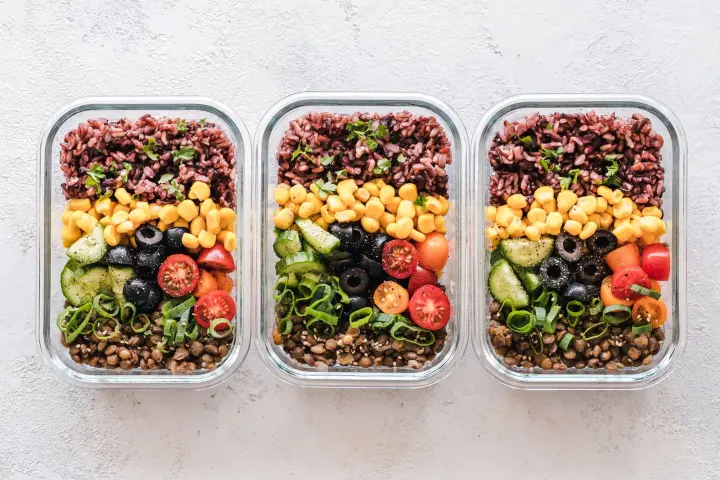
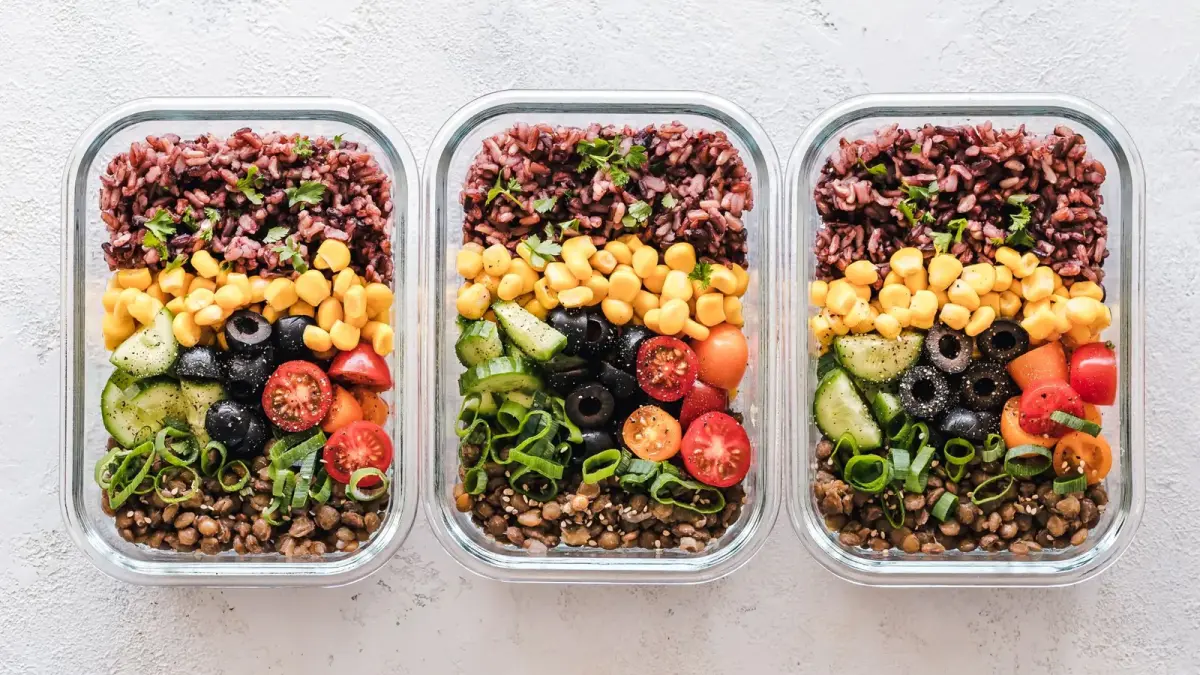
A bento-style box makes it easy to pack small, balanced portions.
| Compartment | Idea | Notes |
|---|---|---|
| 1 | Whole-grain crackers or small sandwich pieces | Cut into small pieces for younger kids |
| 2 | Cheese cubes or a plain yogurt cup | Needs to stay cold |
| 3 | Fruit, such as sliced apples or quartered grapes | Cut grapes for young children |
| 4 | Veggie sticks with a dip | Cook or cut small for toddlers |
| 5 | A small treat or a protein such as hard-boiled egg | Keep eggs cold |
What to take from the table: variety in small portions often helps picky eaters. Fill each compartment, but do not stress about perfect balance.
Cut round foods such as grapes into quarters for young children, as pediatric guidance advises, and ask your pediatrician about other choking hazards.
A safe lunch is a cold lunch. Two cold packs and an insulated bag are the simple recipe.
Gear We Found Useful to Mention
These are examples. We did not test them for this article. The details come from the Amazon listings (checked October 4, 2026), and listings can change. Check the current size, materials and care directions before buying.
Pick 1 · A five-compartment bento-style lunch box
Bentgo Kids Bento-Style 5-Compartment Leak-Proof Lunch Box
May suit: Parents who pack school or daycare lunches and want small, separate sections for fruit, vegetables, protein and a snack.
A practical lunch box for variety. Why it works: five little compartments invite you to pack small amounts of several foods, which is a gentle way to offer new things. Best for: school lunches, picnics and snack plates. Problem it solves: soggy, mixed-up lunches and the “I don’t like foods that touch” problem.
- Five compartments to keep foods separate
- Listing says a leak-proof lid and latches kids can open
- Removable tray is freezer safe, microwave safe and top-rack dishwasher safe, per the listing
- Listing says BPA free, with a capacity of 2.4 cups
- Compartments
- 5
- Capacity
- 2.4 cups (per listing)
- Material features
- BPA free, dishwasher safe (per listing)
- Tray care
- Freezer, microwave and top-rack dishwasher safe (per listing)
- Lid
- Leak-proof with latches (per listing)
- Brand
- Bentgo
Strengths
- Small sections make variety easy: a bit of each food group
- Helps keep foods from touching, which some picky eaters prefer
- Easy to wash
Limitations
- Compartments are small, so it fits snack-size portions better than big meals
- Check the brand's care notes for what can go in the microwave
Affiliate link. As an Amazon Associate, we earn from qualifying purchases.
Pick 2 · A soft insulated lunch bag
FlowFly Kids Insulated Soft Lunch Bag
May suit: School-age kids who need a soft insulated bag with room for a lunch container and an ice pack.
An insulated starting point. Why it works: an insulated bag slows warming, and cold packs do the rest. Best for: sandwiches, yogurt and fruit. Problem it solves: warm lunchbox food.
- 600D polyester outside, per the listing
- Food-safe PEVA lining, per the listing
- Measures about 4.3 x 7.7 x 10.6 inches, per the listing
- Zippered, compact and easy to clean, per the listing
- Material
- 600D polyester with PEVA lining (per listing)
- Size
- H 4.33 x W 7.7 x L 10.6 inches (per listing)
- Style
- Soft-sided insulated bag
- Care
- Wipe clean (per listing)
Strengths
- Soft sides pack easily into a backpack
- Insulation helps keep food cold longer when used with ice packs
- Compact for small kids
Limitations
- An insulated bag alone is not enough, so USDA advises using at least two cold sources with perishable foods
- Wash it regularly
Buy from Amazon : FlowFly Kids Insulated Soft Lunch Bag (opens Amazon in a new tab)
Affiliate link. As an Amazon Associate, we earn from qualifying purchases.
Pick 3 · Slim reusable ice packs, set of four
Healthy Packers Slim Reusable Ice Packs (set of 4)
May suit: Parents packing lunchboxes who need slim cold packs that fit in small bags.
Cold sources that fit. Why it works: USDA says to use at least two cold sources with perishable foods, and slim packs make that practical. Best for: school and work lunches. Problem it solves: food that warms up by noon.
- Set of four slim hard-gel ice packs, per the listing
- Each pack about 7 x 4.7 x 0.5 inches, per the listing
- Reusable; freeze overnight, per the listing
- Listing says BPA-free, non-toxic materials
- Count
- 4 packs
- Size
- About 7 x 4.7 x 0.5 inches each (per listing)
- Type
- Reusable hard gel (per listing)
- Use
- Lunch boxes, bento boxes, breast milk bags and coolers (per listing)
Strengths
- Slim enough for small lunch bags
- Four packs make it easy to use two per lunch
- Reusable every day
Limitations
- Remember to refreeze them every night
- Check packs for leaks and replace damaged ones
Buy from Amazon : Healthy Packers Slim Reusable Ice Packs (set of 4) (opens Amazon in a new tab)
Affiliate link. As an Amazon Associate, we earn from qualifying purchases.
Pick 4 · An insulated stainless-steel water bottle
Hydro Flask Standard Mouth Insulated Stainless Steel Water Bottle (21 oz)
May suit: Anyone who drinks more water when it is cold and easy to carry, from school kids to parents on the go.
A sturdy bottle to make water the easy choice. Why it works: cold, great-tasting water is easier to reach for than a sugary drink. Best for: school bags, car cupholders and desks. Problem it solves: relying on juice or soda when you are thirsty.
- Insulated stainless steel; listing says 24 hours cold and 12 hours hot
- Leakproof Flex Cap (per listing)
- Fits most cupholders (per listing)
- Dishwasher safe, with pro-grade stainless steel that listing says avoids flavor transfer
- Size
- 21 oz
- Material
- Stainless steel (per listing)
- Keeps drinks
- Cold for 24 hours, hot for 12 hours (per listing)
- Lid
- Leakproof Flex Cap (per listing)
- Care
- Dishwasher safe (per listing)
- Brand
- Hydro Flask
Strengths
- Cold water stays cold, which helps some people drink more
- Stainless steel is durable
- Fits cup holders
Limitations
- Costs more than a basic plastic bottle
- Insulated bottles are heavier than empty plastic ones
Affiliate link. As an Amazon Associate, we earn from qualifying purchases.
Pick 5 · Reusable silicone bags for sandwiches and snacks
Stasher Premium Reusable Silicone Food Storage Bags (4-pack)
May suit: Families who want a reusable swap for single-use zip bags in lunches and the fridge.
A handy swap for single-use bags. Why it works: the seal presses shut and the silicone washes clean, so one bag does the work of many. Best for: snacks, sandwiches and prepped veggies. Problem it solves: a drawer full of torn zip bags.
- Listing says platinum food-grade silicone with a leak-free Pinch-Loc seal
- Four bags: one half-gallon and several smaller sizes
- Reusable and washable by hand or in the dishwasher (per listing)
- Meant to replace single-use plastic bags (per listing)
- Count
- 4 bags (1 half gallon and smaller sizes)
- Material
- Silicone (per listing)
- Seal
- Pinch-Loc, leak-free (per listing)
- Care
- Dishwasher or warm soapy water (per listing)
- Brand
- Stasher
Strengths
- Reusable for months or years
- Seals well for snacks and sandwiches
- Washes easily
Limitations
- Costs more up front than zip bags
- Bags need to be turned right side out to wash, so follow the care steps on the listing
Affiliate link. As an Amazon Associate, we earn from qualifying purchases.
8 Common Lunch-Box Mistakes (and Easy Fixes)
❌ Mistake 1: Packing perishable foods in a paper bag
✅ Fix: Use an insulated bag with two cold sources.
❌ Mistake 2: Using one ice pack
✅ Fix: Use two, one above and one below the food.
❌ Mistake 3: Packing warm food
✅ Fix: Chill the lunch overnight and pack it just before leaving.
❌ Mistake 4: Skipping the fridge
✅ Fix: Store lunch in the refrigerator at school or work if one is available.
❌ Mistake 5: Not cleaning the lunch box
✅ Fix: Wipe or wash it every day.
❌ Mistake 6: Picking a box your child cannot open
✅ Fix: Test latches and zippers with your child.
❌ Mistake 7: Ignoring allergy rules
✅ Fix: Check the school’s policy and read every label.
❌ Mistake 8: Bringing home perishable leftovers
✅ Fix: Throw them away rather than eating them later.
Why these fixes work: they follow USDA guidance and keep food out of the danger zone.
Pro Tips for Easier Lunch Packing
- Pack the night before. Chill it, then add cold packs in the morning. Best for: busy mornings.
- Keep a “lunch station.” Store boxes, bags and ice packs together. Best for: speed.
- Rotate two lunch boxes. One in use and one in the dishwasher. Best for: clean boxes.
- Let kids choose from a short list. Best for: buy-in.
- Check the box at pickup. If your child left uneaten food, it tells you what to adjust. Best for: learning their tastes.
Real-Life Examples: Three Lunch Stories
These are illustrative examples based on common situations. They are not real customer reviews or quotes.
Example 1: The warm yogurt
A mom packs a yogurt with one small ice pack and finds it warm at noon. The fix: she adds a second pack and chills the yogurt overnight.
Example 2: The stuck latch
A dad’s child cannot open a stiff lunch box latch. The fix: they choose an easier one and practice at home.
Example 3: The bento upgrade
A parent with a picky eater switches to a compartment box. What worked: small portions and variety.
💡 The pattern
Insulate, add two cold sources and pack just before leaving.
Frequently Asked Questions
How many ice packs do I need?
The USDA says at least two cold sources, one above and one below the food, for perishable items.
Is a paper bag okay for lunch?
The USDA says paper bags are not a safe choice for perishable foods because they tear and leak as cold items thaw.
Can I pack lunch the night before?
Yes. The USDA says you can prepare the food ahead, chill it in the fridge and pack the lunch bag right before you leave.
What foods need to stay cold?
Perishable foods such as meat, poultry, eggs, cheese and yogurt.
Is a thermos safe for hot food?
Yes, if the food is steaming hot when packed and the container is preheated, following the maker’s directions.
How do I handle allergies?
Follow your doctor’s advice and your school’s rules, and read every label. The FDA lists the major allergens.
Your Lunch Box Checklist (and Final Thoughts)
- Choose an insulated lunch bag or box.
- Pick a size that fits your child and the backpack.
- Buy slim ice packs and use two for perishable foods.
- Make sure your child can open every latch and lid.
- Pack the lunch right before leaving home.
- Wash the lunch box and bottle daily.
- Check the school’s allergy rules and read labels.
- Throw away perishable leftovers.
🛒 Want help planning lunches and snacks for the week? Use the meal planner.
Final thoughts
The best lunch box is the one your child will use and that keeps food safe. A compartment box for portions, an insulated bag for temperature and two cold packs for peace of mind are a simple, reliable combo.
Start with what fits your child, and adjust as you learn their habits. 🥪
Affiliate note: some links in this article are Amazon affiliate links. If you buy through them, we may earn a small commission at no extra cost to you. See our Affiliate Disclosure. Product details were checked on Amazon.com on October 4, 2026 and may change.
Sources and further reading
This article is general information, not medical advice. It does not replace guidance from your doctor, midwife, pediatrician or other qualified professional. Read our health information disclaimer.