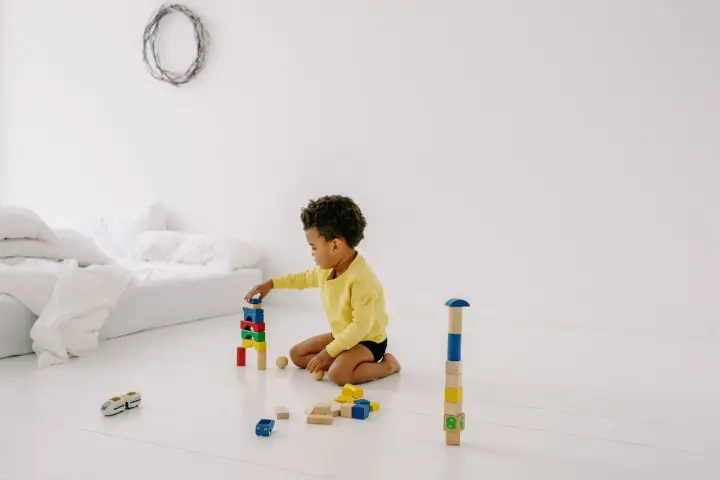
Bedtime with a toddler can feel like a negotiation with a very small, very determined lawyer. One more story. One more drink. One more hug. Then a sudden need to find a specific stuffed animal. If bedtime in your house takes an hour and ends in tears, you are not alone, and you are not failing.
⚡ The short answer
A steady, calm routine at the same time every night is the best-supported tool for toddler sleep. The American Academy of Pediatrics suggests a short routine such as brush, book and bed, a consistent bedtime, a dim and comfortable room, screens off well before bed and patience while your child learns to settle. Ages 1 to 2 need about 11 to 14 hours of sleep including naps, and ages 3 to 5 need about 10 to 13 hours.
Below you will find sleep needs, a sample routine, a bedroom checklist, fixes for common problems and a gentle plan for the first week.
This is general information, not medical advice. If your child snores loudly, stops breathing during sleep, seems very sleepy all day or has trouble sleeping that does not improve, talk with your pediatrician. This article is about toddlers. For babies under 12 months, follow your pediatrician’s safe-sleep guidance. 🌙
How Much Sleep Does a Toddler Need?
The American Academy of Pediatrics (AAP) supports sleep guidelines that give a range for each age, including naps.
| Age | Hours in 24 hours |
|---|---|
| 1 to 2 years | 11 to 14 hours |
| 3 to 5 years | 10 to 13 hours |
What to take from the table: these are ranges, not exact targets. Some children do well at the lower end, and others need more. If your child wakes happy, plays well and is not constantly cranky, they are probably getting the sleep they need. Ask your pediatrician if you have doubts.
Sleep also has to be at the right times and without too many interruptions. A child can spend 12 hours in bed and still be tired if their sleep is broken or they go to bed very late.
💡 Work backward from wake-up time
Pick a wake-up time that suits your family, then count back to find a bedtime that gives your child enough hours. The sleep calculator can help you map out the numbers.
Why a Routine Helps
A bedtime routine tells a child’s body and mind that sleep is coming. The AAP says that for young children it helps to start early with a bedtime routine such as brush, book, bed. Doing the same steps in the same order every night makes bedtime predictable, and predictable is calming for toddlers.
Benefits include:
- Less resistance. Children push back less when they know what comes next.
- A smoother wind-down. Quiet activities help the body relax.
- Good habits. Brushing teeth and reading become part of the day.
- Connection. A few calm minutes with a parent can be the best part of the day.
A Simple Bedtime Routine You Can Copy
You do not need a long routine. Twenty to thirty minutes is plenty for most toddlers. Here is a sample you can adapt.
- Dim the lights. Lower the lights in the house and turn off screens. The AAP suggests turning off all screens at least 60 minutes before bedtime.
- Bath or wash-up. A bath, or a quick wash of face and hands, signals that the day is over. Keep it calm.
- Pajamas and teeth. Put on pajamas and brush teeth. Make it the same order each night.
- Book time. Read one or two books. Pick calm stories, and say the number ahead of time.
- Songs and cuddles. A short song or a few quiet words. Keep voices low.
- Lights out. Say goodnight, tuck in a comfort item and leave the room.
Why this works: every step is quiet, repeated and ends in the bedroom. The more automatic the routine, the less you need to negotiate.
Timing: The Same Bedtime Every Night
The AAP encourages a consistent schedule: the same wake-up time on weekdays and weekends, regular mealtimes, nap times and play times. A consistent bedtime helps your child know what to expect.
A few timing tips:
- Choose a window, not a minute. Aim to start the routine at about the same time each night.
- Watch for tired signs. Rubbing eyes, yawning or sudden clinginess often mean it is time.
- Keep naps predictable. A nap that is too late in the day can push bedtime later.
- Keep weekends close to weekdays. Big changes can cause a “social jet lag” for little ones.
- Be flexible on special days, then return to the routine the next night.
Set Up a Sleep-Friendly Bedroom
The AAP suggests a bedroom that supports sleep and is safe.
| Item | Why it helps | Tip |
|---|---|---|
| Dim lighting before bed | Helps the body wind down | Use a soft lamp instead of overhead lights |
| Comfortable temperature | Too hot or too cold can wake a child | Dress your child for the room, not the other way around |
| Quiet space | Fewer disruptions | A steady background sound can mask household noise; keep the volume low and the cord out of reach |
| Comfort object | Helps with settling and night wakings | Make sure it is safe and has no choking hazards |
| Clear floor and secure furniture | Safety if a toddler climbs out | Anchor tall furniture to the wall |
| No screens | Screens can make it harder to settle | Charge devices in another room |
What to take from the table: a quiet, calm and safe room does as much as the routine. Anchor furniture, secure window cords and remove anything a child could climb on.
⚠️ Keep the bedroom safe
Anchor dressers and bookcases to the wall, keep cords from blinds and sound machines well out of reach and remove anything a toddler could climb to get out of a crib or bed. Ask your pediatrician about the right volume and placement for any sound machine, and about when to move from a crib to a bed.
Comfort Items and Night Lights
HealthyChildren.org suggests allowing a comfort object such as a stuffed animal, a blanket or a small toy, especially if your toddler wakes in the night. Make sure the item is safe and has no small parts that could be choking hazards. For toddlers who are afraid of the dark, a dim night light may help. Meet comfort needs before lights out: a drink of water, a last trip to the potty, a hug and the night light all belong in the routine, not after it.
A toddler can settle when the steps are the same, the voices are soft and the goodnights are warm.
Fixes for Common Bedtime Problems
Toddlers are experts at delaying bedtime. Here are common problems and calm responses. The AAP’s tips for bedtime trouble include a calming routine, consistency, comfort objects, meeting comfort needs early and patience.
| Problem | What may be going on | What to try |
|---|---|---|
| Stalling (“one more drink”) | Testing limits or seeking attention | Meet needs before lights out, and use a short checklist: drink, potty, hug |
| Repeated calling out | Wanting you near | Confirm safety once, then respond calmly and briefly; the AAP notes that checking repeatedly teaches a child to expect you each time |
| Getting out of bed | Not sleepy or curious | Walk the child back quietly with minimal talk, every time |
| Fear of the dark | Imagination growing | Use a night light and a calm reassurance |
| Early waking | Bedtime too late, too much light, or hunger | Check the room darkness and the wake-up time |
| Skipping naps | Becoming too tired or too energetic | Keep quiet time even without a nap |
| Bedtime battles | Overtired or overstimulated | Start the routine earlier and keep the last hour calm |
What to take from the table: most problems improve with consistency. Pick one response and use it every time. Mixed messages make bedtime longer.
When Life Interrupts the Routine
Illness, travel, new siblings and big changes can all upset sleep. That is normal.
- Illness. Offer extra comfort, then return to the routine as soon as your child feels better. Call your pediatrician if you are worried.
- Travel. Bring familiar items, such as the comfort object and a favorite book, and keep the order of the routine the same.
- New baby. Give your toddler a special job at bedtime and a few minutes of one-on-one time.
- Time changes. Shift bedtime in small steps over several days.
- Developmental leaps. Toddlers often test limits when they learn new skills. Stay steady.
📌 Be kind to yourself
A rough week does not undo the work you have done. The CDC’s positive parenting tips for toddlers encourage routines, patience and calm responses. Return to your steps and start fresh the next night.
Naps and Daytime Habits
What happens during the day affects bedtime.
- Keep nap times steady. A consistent schedule helps your child feel secure, according to the AAP.
- Avoid very late naps. A nap close to bedtime can delay sleep.
- Get outside. Daylight and active play can help children feel ready for sleep.
- Offer regular meals and snacks. A child who is truly hungry may struggle to settle.
- Keep the last hour calm. Save wrestling and chase games for earlier in the day.
Using a Visual Timer or Checklist
Toddlers do better when they can see how much time is left. A timer or a simple picture chart can help.
- Make a picture chart. Draw or print small pictures for each step: bath, pajamas, teeth, book, songs.
- Use a sand timer. A five-minute sand timer can show how long you have for a book or a cuddle. When the sand runs out, it is time for the next step.
- Give choices within limits. “Do you want the red pajamas or the blue ones?” Choices give a toddler a sense of control without changing the routine.
- Praise the steps. “You brushed your teeth so well!” Kind words go a long way.
A Gentle One-Week Plan
Changes take time. Here is a plan for a week of building a new routine.
- Night 1 to 2: choose your steps. Decide on a simple routine of three to five steps and write them down.
- Night 3: set the time. Pick a start time and stick to it, even if your child is not yet sleepy.
- Night 4: tune the room. Dim the lights, cut the noise and tuck in the comfort item.
- Night 5 to 6: stay consistent. Respond the same way to stalling and calling out.
- Night 7: review. Notice what helped, change one thing and keep going.
Why this works: small, steady changes give your child time to learn the pattern. Expect a few rough nights. Your calm presence is the main tool.
Gear That Can Help
These are examples. We did not test them for this article. The details come from the Amazon listings (checked October 4, 2026), and listings can change. No product replaces a steady routine.
Pick 1 · A simple white noise machine to soften household sounds
Yogasleep Dohm Classic White Noise Sound Machine
May suit: Families who want steady background noise to soften household sounds at bedtime.
A simple sleep helper. Why it works: steady noise can cover sudden household sounds that wake light sleepers. Best for: bedrooms near noisy areas. Problem it solves: little wake-ups from doors, voices and traffic.
- Listing says a fan-based, natural white noise sound
- Dual speed settings, per the listing
- Plug-in design with a 7-foot power cable, per the listing
- Listing says it has been made since 1962
- Sound
- Fan-based white noise (per listing)
- Settings
- Two speeds (per listing)
- Power
- Plug-in, 7-foot cable (per listing)
- Brand
- Yogasleep
Strengths
- Simple switch, no app or screen
- Masks traffic, voices and other household sounds
- Works for adults and kids
Limitations
- Keep the volume low and the machine out of a baby's reach, per general safety guidance
- It plugs in, so cord placement matters in children's rooms
Buy from Amazon : Yogasleep Dohm Classic White Noise Sound Machine (opens Amazon in a new tab)
Affiliate link. As an Amazon Associate, we earn from qualifying purchases.
Pick 2 · A five-minute sand timer for visual routines
Hourglass Sand Timer, 5 Minutes, with protective cover
May suit: Families who want a visual cue for a calm, unhurried meal.
A gentle way to pace a meal. Why it works: a visual timer gives children something to watch instead of a clock to race. Best for: older kids learning to pause between bites. Problem it solves: meals that are over in three minutes.
- Counts about 5 minutes; listing says to allow roughly a 10 percent time deviation
- Listing says a double-protection design with a protective outer tube
- Made of glass with a protective cover, per the listing
- Marketed as safe for kids, per the listing
- Time
- About 5 minutes (listing notes up to 10 percent deviation)
- Design
- Glass hourglass with protective cover (per listing)
- Use
- A visual timer for slow meals and quiet time
- Note
- Not a precise clock, per the listing
Strengths
- Silent and screen-free
- Kids can watch the sand and slow down
- Cheap and simple
Limitations
- Not an accurate timer, per the listing
- Glass inside the cover means it should stay out of toddler hands
Buy from Amazon : Hourglass Sand Timer, 5 Minutes, with protective cover (opens Amazon in a new tab)
Affiliate link. As an Amazon Associate, we earn from qualifying purchases.
Pick 3 · A notebook for keeping a simple sleep log
RETTACY Lined Journal Notebook (A5, 192 numbered pages, hardcover)
May suit: Anyone who wants a place to jot questions for the doctor, sleep notes, mood check-ins or to-do lists.
A simple place to write things down. Why it works: writing down symptoms, questions and feelings makes appointments and busy days easier. Best for: new parents and anyone tracking habits. Problem it solves: forgetting what to ask.
- A5 size, about 5.7 by 8.3 inches, per the listing
- 192 numbered pages, college-ruled, per the listing
- Leather-look hardcover, per the listing
- Lay-flat design, per the listing
- Size
- A5 (5.7 x 8.3 in), per listing
- Pages
- 192, numbered (per listing)
- Ruling
- 7 mm college ruled (per listing)
- Paper
- 100 GSM, acid-free (per listing)
- Cover
- Hardcover (per listing)
Strengths
- Numbered pages make it easy to find notes
- Lies flat when open
- Fits in a bag or by the bed
Limitations
- Any notebook works, so choose one you will actually use
- Do not store private health notes where others can read them if privacy matters
Affiliate link. As an Amazon Associate, we earn from qualifying purchases.
8 Common Bedtime Mistakes (and Easy Fixes)
❌ Mistake 1: Changing the routine every night
✅ Fix: Pick a few steps and repeat them in the same order.
❌ Mistake 2: Letting screens run until bedtime
✅ Fix: Turn screens off at least an hour before bed, as the AAP suggests.
❌ Mistake 3: Starting too late
✅ Fix: Begin the routine earlier if your child is overtired.
❌ Mistake 4: Adding exciting play right before bed
✅ Fix: Keep the last part of the evening quiet.
❌ Mistake 5: Answering every call with a long visit
✅ Fix: Confirm your child is safe, then keep responses short and calm.
❌ Mistake 6: Forgetting comfort needs
✅ Fix: Handle water, potty and the night light before lights out.
❌ Mistake 7: Giving up after two nights
✅ Fix: Habits take time. Give a new routine at least a couple of weeks.
❌ Mistake 8: Comparing your child to others
✅ Fix: Sleep needs vary. Use the ranges as a guide and trust your pediatrician.
Why these fixes work: they make bedtime predictable and calm, which is what helps toddlers fall asleep.
Pro Tips for Smoother Nights
- Keep a bedtime snack small and early if needed. A small, simple snack is fine if your child is hungry, followed by teeth brushing. Best for: hungry kids.
- Use the same words every night. “Time for pajamas, then books.” Best for: building predictability.
- Take turns with your partner. Both caregivers should follow the same routine. Best for: consistency and rest for you.
- Expect regressions. Illness, travel and new siblings can upset sleep. Best for: staying calm.
- Look after yourself. A tired parent has less patience. Best for: everyone’s mood.
Real-Life Examples: Three Bedtime Stories
These are illustrative examples based on common situations. They are not real customer reviews or quotes.
Example 1: The long routine
A mom’s routine has grown to include eight books and three songs. She cuts it back to one book and one song. What worked: a shorter, steadier routine.
Example 2: The curtain calls
A dad answers every “Mommy!” with a long chat. He starts confirming safety once and then keeping visits brief. What worked: consistent, calm responses.
Example 3: The early riser
A family finds their toddler wakes at dawn. They darken the room and shift bedtime slightly. What worked: adjusting the room and the schedule.
💡 The pattern
Same steps, same time, same calm words. Repeat for a couple of weeks.
Frequently Asked Questions
How much sleep does my toddler need?
The AAP-supported guidelines say 11 to 14 hours including naps for ages 1 to 2, and 10 to 13 hours for ages 3 to 5.
How long should a bedtime routine be?
Twenty to thirty minutes works for most toddlers. Keep it short enough to repeat every night.
Should I turn off screens before bed?
The AAP suggests turning off all screens at least 60 minutes before bedtime.
Is a comfort object okay?
HealthyChildren.org says a comfort object can help toddlers fall asleep, as long as it is safe and has no choking hazards.
What if my toddler keeps getting out of bed?
Walk them back calmly each time with little conversation. Consistency is the key.
When should I talk to the pediatrician?
If your child snores loudly, seems to stop breathing during sleep, is very sleepy all day or has sleep problems that do not improve.
Your Bedtime Checklist (and Final Thoughts)
- Pick a simple routine of three to five steps.
- Start at about the same time every night.
- Turn off screens at least an hour before bed.
- Dim the lights and keep the house quiet.
- Meet comfort needs before lights out.
- Use short, calm responses to calling out.
- Keep the bedroom safe, with furniture anchored.
- Give a new routine a couple of weeks to take hold.
🛒 Want to map out your child’s sleep and your own? Try the sleep calculator.
Final thoughts
Better bedtimes do not come from a perfect routine. They come from a calm, steady one. Choose your steps, repeat them and give yourself and your child time.
On the nights when it all falls apart, remember that tomorrow is another chance. You are doing a good job. 🌙
Affiliate note: some links in this article are Amazon affiliate links. If you buy through them, we may earn a small commission at no extra cost to you. See our Affiliate Disclosure. Product details were checked on Amazon.com on October 4, 2026 and may change.
Sources and further reading
- HealthyChildren.org (American Academy of Pediatrics) — Healthy Sleep Habits: How Many Hours Does Your Child Need?
- HealthyChildren.org (American Academy of Pediatrics) — Toddler Bedtime Trouble: 7 Tips for Parents
- HealthyChildren.org (American Academy of Pediatrics) — Brush, Book, Bed: How to Structure Your Child's Nighttime Routine
- CDC — Positive Parenting Tips: Toddlers (1–2 years old)
This article is general information, not medical advice. It does not replace guidance from your doctor, midwife, pediatrician or other qualified professional. Read our health information disclaimer.